“Hybrid Theory” – A Milestone for Our Generation
For many of us who grew up on Metallica, Nirvana, Pearl Jam, or Soundgarden, the early 2000s felt like a musical void. Grunge was fading, classic metal sounded more like a hungover memory than a movement, and MTV had fully embraced its R’n’B and pop era. And then, out of nowhere, came Linkin Park with an album that became the cornerstone of a brand new era.
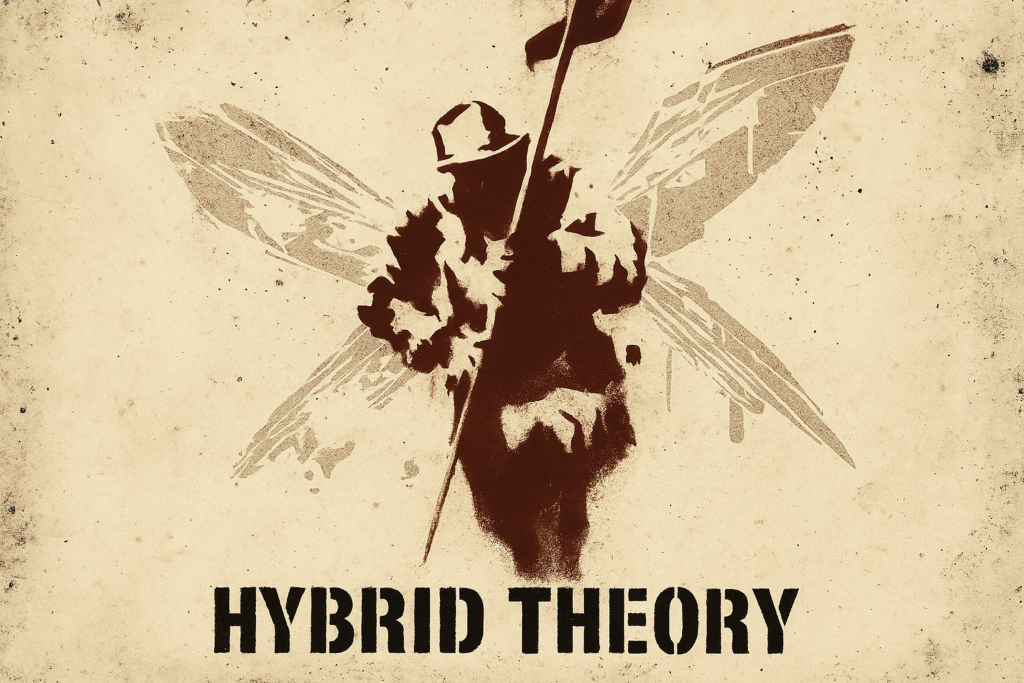
“Hybrid Theory” – released in 2000 – wasn’t just a debut. It was a manifesto. For the emo kids, the gamers, the lost teenagers and the pissed-off twenty-somethings. For those who couldn’t quite name what they were feeling, but could scream along with Chester like their life depended on it. This album didn’t shy away from mixing things – metal with electronics, rap with melody, pain with power. It sounded like an inner war translated into sound. And most importantly – it hit you straight in the gut.
Every track on this album is a hit. “Papercut” is pure emotional ADHD. “One Step Closer” – a hymn of frustration. “Points of Authority” – rebellion laid down in bass lines. And of course, the ever-present “In The End”, which to this day remains one of the biggest rock singles of all time… though honestly? It’s probably my least favorite. Maybe because I’ve heard it too many times, maybe because it was too popular. Or maybe it’s just that “Crawling” speaks to me more. Because it doesn’t say “it’ll be fine” – it says “right now it f**ing hurts”*. And sometimes, that’s all you need to hear.
But before I dive deeper into that song, let’s rewind for a moment – back to where it all started. Before the world heard Chester Bennington’s very first scream.
Before We Heard the Scream – The Origin Story of Linkin Park
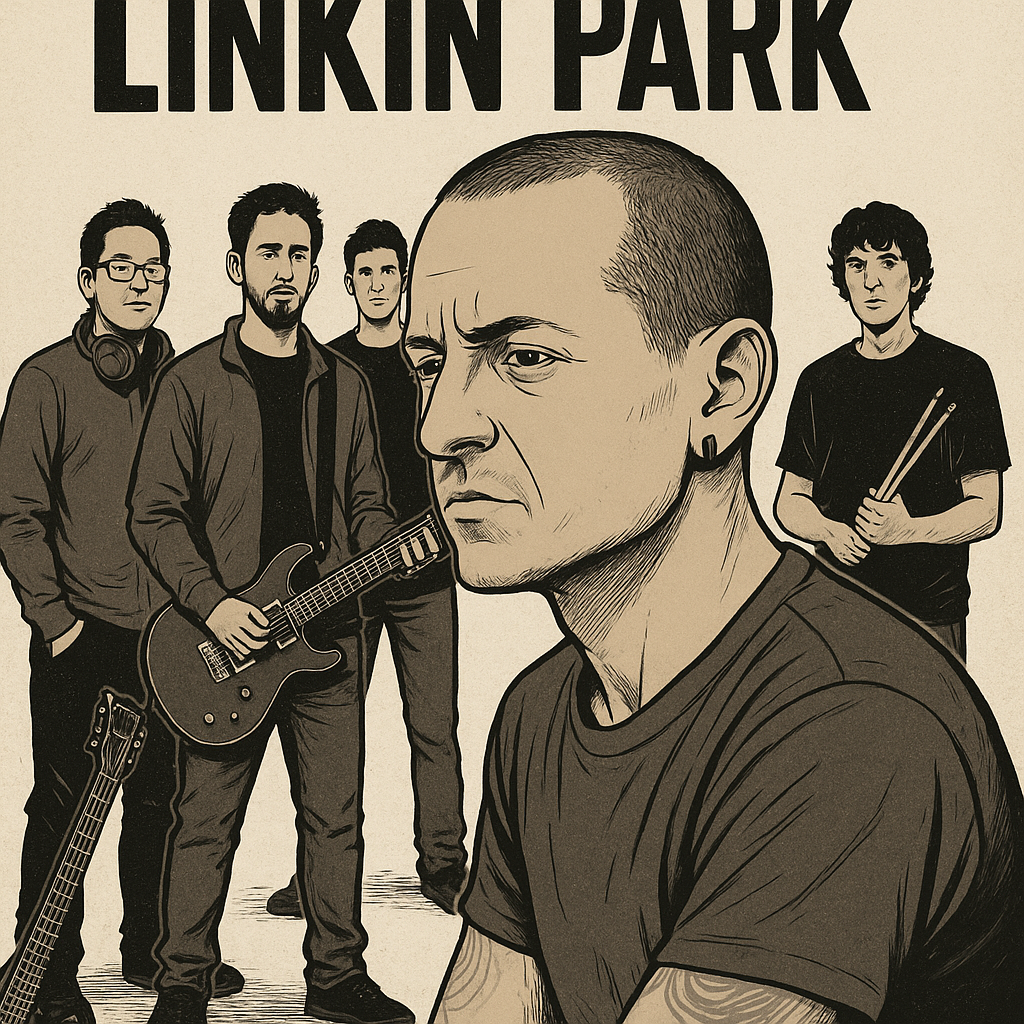
Before they became giants of the alternative scene, Linkin Park were just a group of guys with passion, stubbornness, and… one hell of a rough start. Their first name? Xero – and honestly, that’s exactly how their career sounded at the time: like burning demo CDs, mailing them out by the hundreds, and getting zero (pun fully intended) replies from record labels. But the guys from California had something you can’t fake – a vision.
From the beginning, the lineup featured Mike Shinoda – the mastermind, producer, rapper, and even graphic designer. Add Brad Delson on guitar, Rob Bourdon on drums, Joe Hahn handling samples and effects, and Dave “Phoenix” Farrell on bass. But they were still missing one final piece – a vocalist who could carry the emotional weight of their sound. And that’s when Chester Bennington appeared – a skinny guy from Arizona, with a voice like a scalpel and a past that hurt in every note.
Their story didn’t start out like a fairy tale. Labels kept telling them their sound was too hard to categorize. Too much rap for metal. Too much metal for rap. Too emotional for radio. But with relentless effort, some fine-tuning – and a name change to Linkin Park (to get the matching domain name, true story) – they finally landed a deal with Warner Bros. And then… the rollercoaster officially took off.
In 2000, the world was introduced to Hybrid Theory – and suddenly, Chester and Mike weren’t just underground voices anymore. They became the voices of an entire generation. A generation that felt lost, overwhelmed, angry, and deeply alone. Their music was like a bandage – but not the gentle, pastel kind. It was the kind ripped off fast and without warning. And that’s exactly what we needed.
Linkin Park was never a one-sound band. They experimented, blended genres, messed with expectations. But Hybrid Theory was their foundation.
And Crawling? That was its emotional epicenter.
Chester Bennington – A Voice Like No Other
Chester Bennington wasn’t “just” a vocalist. He was a living instrument — able to sound like an angel one second, then unleash a scream of pure agony the next. His voice held the entire spectrum of emotion — raw, unfiltered, unpolished. That’s why, even after all these years, when you hear Crawling, you still get chills. Because it’s not singing. It’s feeling.
Chester had something you simply can’t teach. He could sing pain and hope at the same time, turning every lyric into more than just words — into a confession. This wasn’t a persona. It was him. And maybe that’s why his voice became a symbol for so many — a voice for a generation that didn’t want to be told “it’s going to be okay.” A generation that needed someone to say, “yeah, I feel it too.”
But that voice didn’t come from nowhere. Chester had a story — a tough one, full of pain, fear, and loneliness. His childhood was marked by trauma. His adulthood, by battles with addiction. But that’s exactly why he sang like every song was his last chance to get it all out. He didn’t sing notes — he sang emotions.
And that’s why it’s almost impossible to imagine Crawling without him. Without that tense, fragile, then explosive vocal. Without that signature trembling in his voice that, even on the twentieth listen, makes you feel like he’s telling your story.
Bennington wasn’t just a frontman — he was an emotional conduit. A living megaphone for people who didn’t have the strength to scream on their own. And not just in Crawling. In every song, in every show, he left a piece of himself on stage.
And that’s why it hurts so much that he’s no longer here.
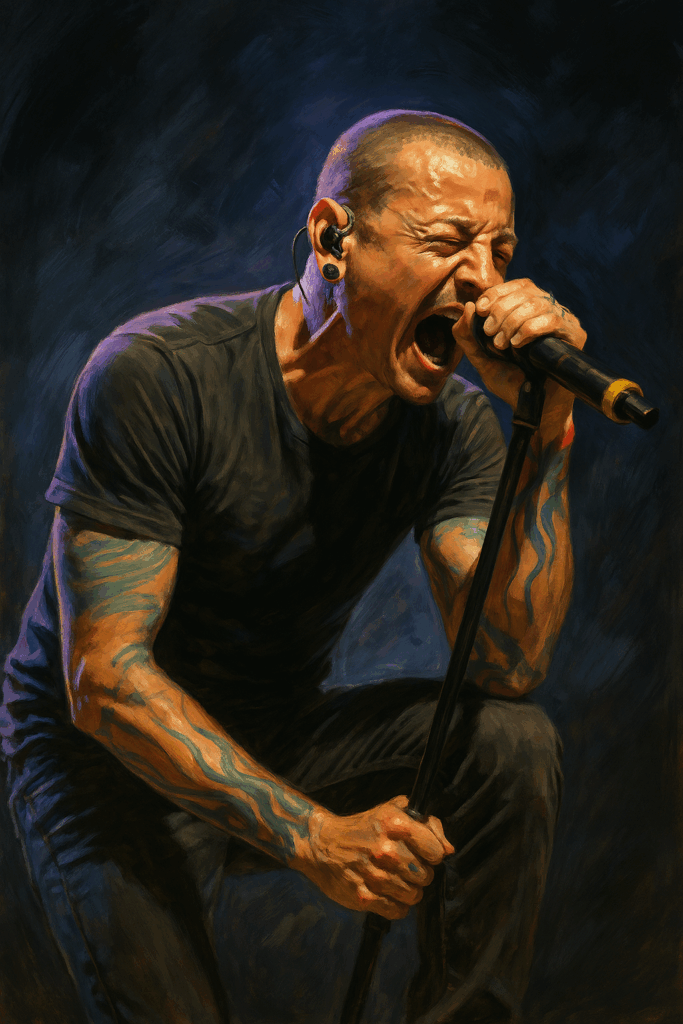
Crawling – When Emotion Hurts, but Heals
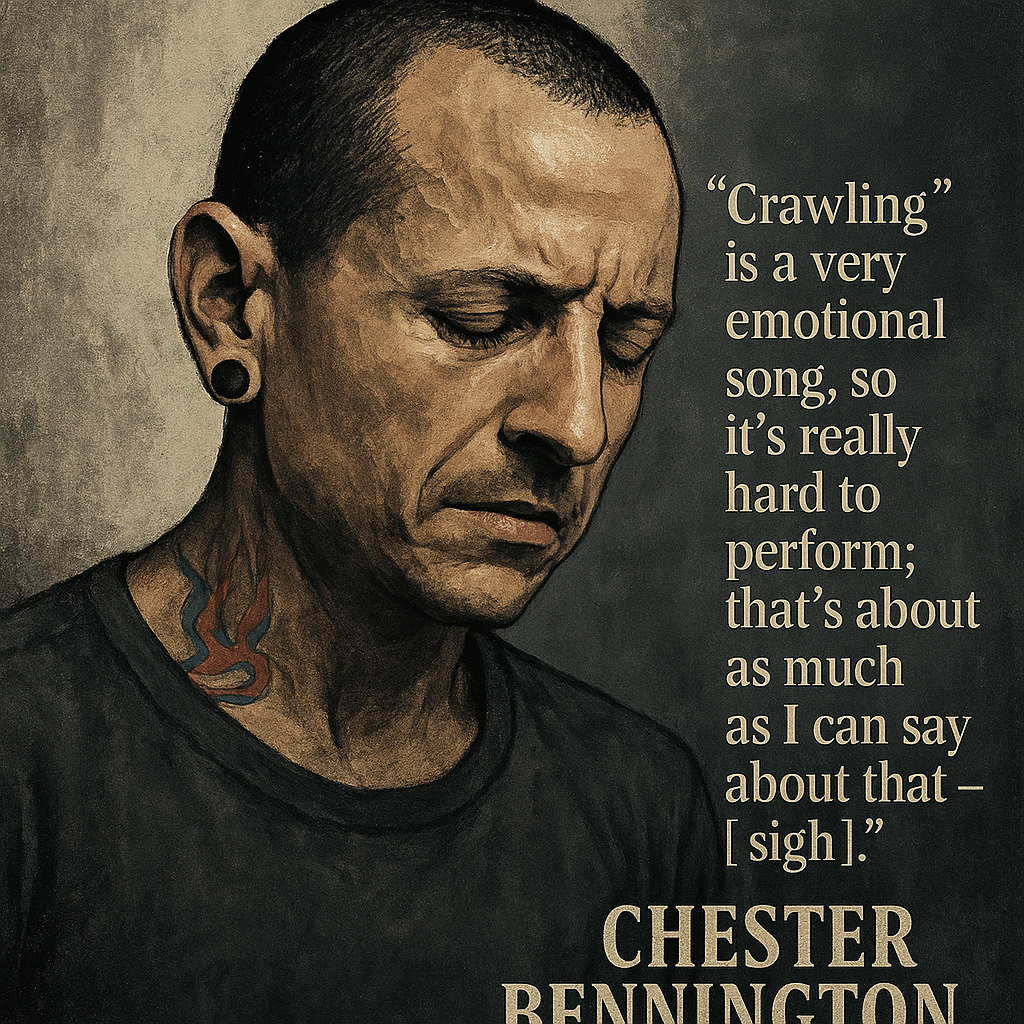
If there’s ever been a song that you don’t just hear but feel, Crawling is absolutely at the top of that list. This isn’t background music for when you’re making spaghetti. This is the kind of song that stops you mid-step, grabs you by the heart, and says: “listen up – nobody talks about this, but everyone feels it.”
For Chester Bennington, Crawling was one of the most personal songs he ever wrote. It was the scream of a man who couldn’t pretend anymore that everything was fine. In an interview with Noisecreep, he admitted openly:
“‘Crawling,’ for example, is probably the most literal song I’ve written for Linkin Park. It’s about feeling like I had absolutely no control over myself when it came to drugs and alcohol.”
And that’s exactly why this song resonates so deeply — because it’s not about someone else, it’s not a metaphor, it’s not a poetic reflection. It’s a raw, open wound that only started to heal when Chester finally spoke it out loud.
But the root of that pain went even deeper. Chester talked openly about his childhood trauma — the abuse he endured, the crushing loneliness it left behind. Crawling wasn’t just about addiction. It was about feeling lost inside your own body, about not accepting yourself, about the constant, exhausting fight with the person in the mirror.
“It’s kind of like admitting something you don’t want to admit — that you have a problem with yourself. Sometimes you have to learn how to live in your own skin and be the person you are. And that’s not always easy.”
What’s most powerful, though, is that Chester never points fingers. He doesn’t blame. There’s no “you” in his lyrics — there’s “I.” There’s self-awareness, responsibility, and the courage to admit: “something inside me pulls me down.” That’s rare — especially in music, where it’s often easier to scream “it’s your fault” than to look in the mirror and say “it’s mine.”
Crawling is drenched in emotions we usually keep locked deep inside:
- Fear – that you’ll slip again, that you’ve lost control.
- Shame – for what you’ve been through, for what you feel.
- Helplessness – against the demons that just won’t let go.
- Loneliness – even in a crowd, even on stage.
And even though all of that sounds overwhelming — for Chester, this song was a form of therapy. He said it outright: without music, he wouldn’t have survived his darkest moments. Writing and performing songs like Crawling was like breathing for him — painful at times, but absolutely necessary.
“This song, these lyrics sold millions of records, won me a Grammy, made me a lot of money. But most importantly — it saved me.”
And that’s exactly why Crawling hits us so hard. Because someone had the courage to say what most of us can’t even put into words. Because someone turned their deepest pain into something beautiful — and shared.
Music as Salvation – Chester Bennington’s Personal Therapy
For some, music is entertainment. For others — a hobby. For Chester Bennington, it was survival. A lifeline. As real as it gets.
When he sang, he wasn’t just sharing his pain — he was releasing it. Through lyrics, through screams, through quiet verses — it was all real. And maybe that’s why his voice resonated with millions around the world. You could hear it — this wasn’t acting, it wasn’t some scripted drama. This was a man screaming to stay alive.
In interviews, Chester often said that writing and singing about his own trauma felt like a form of self-therapy. His words hit hard in their simplicity and honesty:
„The feeling that comes from being able to write about these experiences, to sing about them — it really helps me. Every day as a recovering alcoholic is a battle with that voice in the back of your head saying, ‘Have a drink, it’s just one beer, nothing bad will happen, loosen up a little.’”
And that’s where the real power of his words lies — Chester never pretended to be above it all. He didn’t say, “I’m clean now, so it’s all behind me.” He said, “It’s a daily battle.” And the one thing that helped him stay on that narrow path of sobriety and peace was music.
Albums like Hybrid Theory, Minutes to Midnight, and especially One More Light felt like recordings of therapy sessions. Each song was a step in the process — from pain and darkness to (even if temporary) hope. Chester said that through writing lyrics, he could understand himself better, sort through his thoughts, see himself from a distance — as if he wasn’t just a victim of his demons, but someone who could face them and fight back.
But there was something else — maybe the most important part of that musical therapy: community. Chester felt that when he shared his pain, he wasn’t alone in it. And that others — fans who were lost, lonely, buried under their own stories — weren’t alone either.
“I know it’s not cool to be an alcoholic, a jerk, and someone who picks fights. I choose sobriety…” he said.
And that’s exactly why these songs mean so much. Because they’re not just sound. They’re testimony. They’re therapy — not just for the one who wrote them, but for anyone who hears a piece of themselves in them.
Glass Cage of Emotion – On the “Crawling” Music Video
The song Crawling is already an emotional earthquake on its own, but the music video adds a whole new layer of visual weight — the kind that knocks the air out of you. This isn’t just a music video. It’s a short film about pain, isolation, and the quiet war so many of us fight behind closed doors.
At the heart of the story is a young woman. Her face says everything — fear, sadness, shame, emptiness. There are no words, no dialogue — just images that hit harder than a thousand lines of text. She shuts down emotionally, both figuratively and literally — as crystal formations start appearing around her, growing, hardening, trapping her. It’s as if her world is freezing over.
And that’s where the most powerful symbol of this video comes in: the crystal. On one hand — beautiful, cool, translucent. On the other — cold, impenetrable, painful. It’s the perfect metaphor for addiction, emotional isolation, and mental suffering. For those who know Chester’s story, it also subtly nods to his struggles with meth during his youth.
The most haunting scene? The girl scrubbing away the marks of abuse in the shower. This isn’t stylized pain — it’s a moment of cleansing, but also of deep shame. Later, we see her hiding behind heavy makeup — a mask to shield her from the world. But little by little, frame by frame, she starts to reclaim control. In the end, the crystals shatter. She steps out of the trap. Wipes off the makeup. Looks straight ahead. And smiles.
Not because everything is okay.
But because she took the first step.
Fun Facts Worth Knowing
– 🎬 Directed by the Brothers Strause – known for their visual effects work, they gave the video its signature surreal, icy aesthetic.
– ❌ An alternate ending was rejected – the original concept had a horror-style twist where a crazed fan murders the band. Warner Bros. quickly said “nope.”
– ❄️ The crystals – they symbolize addiction, emotional numbness, and inner isolation — and possibly reference meth use, something Chester struggled with in his youth.
– 👤 The main actress – played by Katelyn Rosaasen, who also appeared in The Offspring’s “Want You Bad.”
– 🎸 Phoenix’s return – this was the first Linkin Park video to feature bassist Dave “Phoenix” Farrell after rejoining the band.
– 🏆 Award nods – “Crawling” was nominated for Best Rock Video at the MTV VMAs but lost to Limp Bizkit’s “Rollin’.”
– 🎥 Uncut footage exists – behind-the-scenes clips from the video shoot can be found on bonus materials included with the single.
– 🪞 The glass castle metaphor – the crystal imagery echoes the idea of a “glass castle with a crack” — hidden fragility visible only up close.
The Crawling video is a haunting mirror of the song’s message — a visual journey through pain, paralysis, and the slow, painful climb back to self.
“Crawling” Live – From Raw Power to Heartbreaking Intimacy
Some songs hit hard in the studio version — but live, they become something more. A shared experience. A moment of catharsis. An emotional breakthrough between artist and audience. Crawling is absolutely one of those songs.
Early Performances – Texas and Raw Energy
Early live performances of Crawling, like the one at Texas Stadium in 2001, felt like an extension of Hybrid Theory itself — fast, loud, aggressive. Chester Bennington tore his voice raw, Mike Shinoda fired off his rap lines with precision, and the crowd went absolutely wild like it was a full-blown rock explosion.
It was an emotional explosion — wild, unfiltered, and raw. Very close to the album version, but with an extra shot of adrenaline. The rawness and youthful energy gave those performances a sense of pure power and rebellion.
But over time, Crawling began to mature — right alongside the band.
Final Performances – Piano, Fans, and Pure Emotion
In 2017, during the final One More Light Tour, Crawling sounded completely different. The guitars, the samples, the noise — all gone. What remained was a piano, Chester… and the fans.
That performance — especially the one in Birmingham — carried an incredibly intimate energy. Chester would sit at the edge of the stage or step down into the crowd, handing the mic to the audience. They sang with him, for him — and often, he just listened, eyes brimming with tears. It wasn’t a concert anymore — it was a moment of collective healing through music.
This version was later released on One More Light: Live, an album that came out after Chester’s death. The recording grabs you by the throat — not just because of what it represents, but because you can feel the exhaustion, the tenderness, and the deep, honest bond between him and the people in front of him.
„Crawling was a song that grew with Chester — and grew with us. From angry screams in sweaty clubs, to roaring stadiums packed wall to wall, all the way to the quiet voices of the crowd and a lone piano.
It wasn’t just a performance.
It was a memory.
And a goodbye.
In the End – Why “Crawling” Stays With Us Forever
Crawling is more than just a song. It’s an emotional autopsy, carved into sound. For some, it was their first encounter with Linkin Park. For others, it’s the soundtrack to an inner war that never really ends. But for everyone — it’s a raw, powerful manifesto of honesty and pain. One that doesn’t try to fix what’s broken, but dares to name what’s invisible.
Chester Bennington had the courage to speak about the things we usually sweep under the rug — fears, addictions, trauma. Because of him, millions of people felt a little less alone. His voice became therapy, and his words became a lifeline for those who couldn’t put their own pain into sentences.
But sadly — even the loudest scream isn’t always enough to silence the demons within.
Chester Bennington died by suicide on July 20, 2017. His death was a shock to the world — and a painful reminder that those who help others often suffer the most in silence.
He’s no longer with us. But his music is. And it still saves those who reach for it when everything else has failed.
Because sometimes, a song can do more than a therapist ever could.
And that’s why Crawling stays with us forever.